
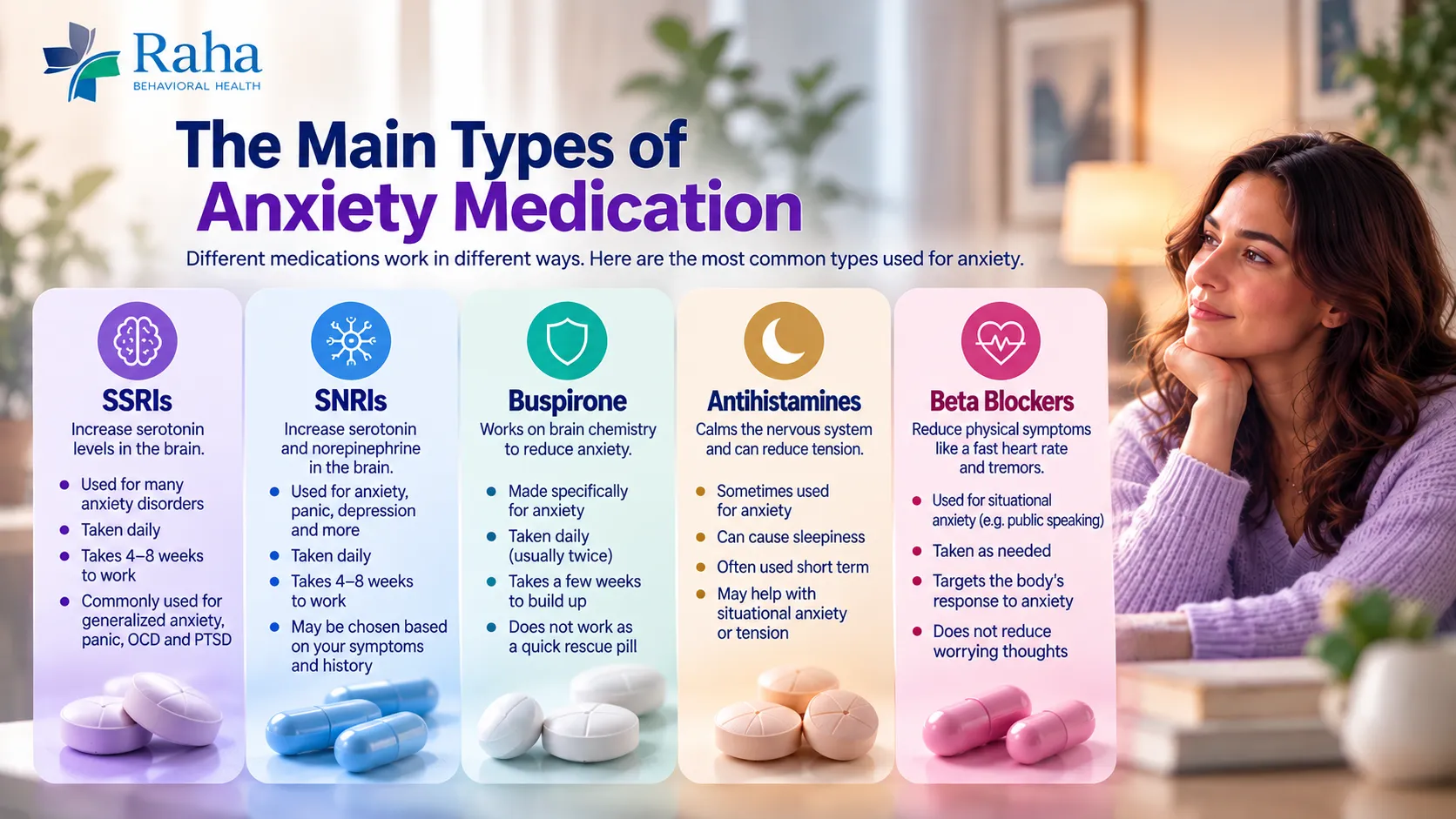
SSRIs are what most prescribers reach for when anxiety is ongoing. You take one every day and it takes weeks to build up. There’s also a daily anti-anxiety medicine in a class of its own, with the same slow build. An antihistamine, the kind that started out as an allergy medicine, gets used for anxiety and tension sometimes, and makes a lot of people sleepy. And beta blockers are a different animal entirely: they go after the body’s side of anxiety, the pounding heart and the sweaty, shaky hands.
Which one you’d get? That depends on you, not on how severe the anxiety sounds. Most people don’t expect that.
Specific medicine names are left out on purpose, since which one suits you is a decision for you and your prescriber. What follows is how each type works, how long you wait, what side effects come up, and what’s worth asking before you start. It can’t pick a medicine for you. That takes someone who knows your history. But walking into an appointment already knowing the basics tends to help.
What are the main types of anxiety medication?
Four groups come up most.
SSRIs and their close relatives, SNRIs, are antidepressants that also treat anxiety. Daily pills, and the usual starting point for lots of anxiety disorders. One anti-anxiety medicine sits in a class of its own, made for anxiety, also daily. An antihistamine (think allergy pills, loosely) gets prescribed for anxiety now and then. And beta blockers were built for heart and blood pressure trouble, then turned out to be useful for what anxiety does to your body.
There’s a fifth, benzodiazepines, and you’ve probably seen them pop up when people search “what’s given for severe anxiety.” They work differently and they’re used far more narrowly. More on that below.
None of these cures anxiety. Medicine can turn the volume down enough that you can think straight, sleep, get through a Tuesday. Plenty of people do better when it’s paired with therapy. One tool, not the whole toolbox. If you’re wondering how therapy fits in, our page on anxiety treatment in Houston shows how care gets put together.
How do SSRIs work for anxiety?
SSRI stands for selective serotonin reuptake inhibitor. Say that three times fast. What it boils down to: these medicines raise how much serotonin is available in your brain, and serotonin is a messenger tied to mood and to how you react to stress.
You’ll hear that anxiety is just a “chemical imbalance” a pill fixes. It isn’t that tidy. The full reasons these medicines help haven’t been completely mapped out. What is well established is that they help a lot of people with anxiety and panic, and they’ve been studied for years.
There’s more than one SSRI, and they aren’t interchangeable on paper. Some are used for generalized anxiety disorder and depression. Others are used for panic attacks, social anxiety, OCD and PTSD. Which one a prescriber picks comes down to your symptoms, your history and how you’ve responded to treatment before.
One pill a day, around the same time. You might start on a low dose that gets raised bit by bit.
How long do SSRIs take to work?
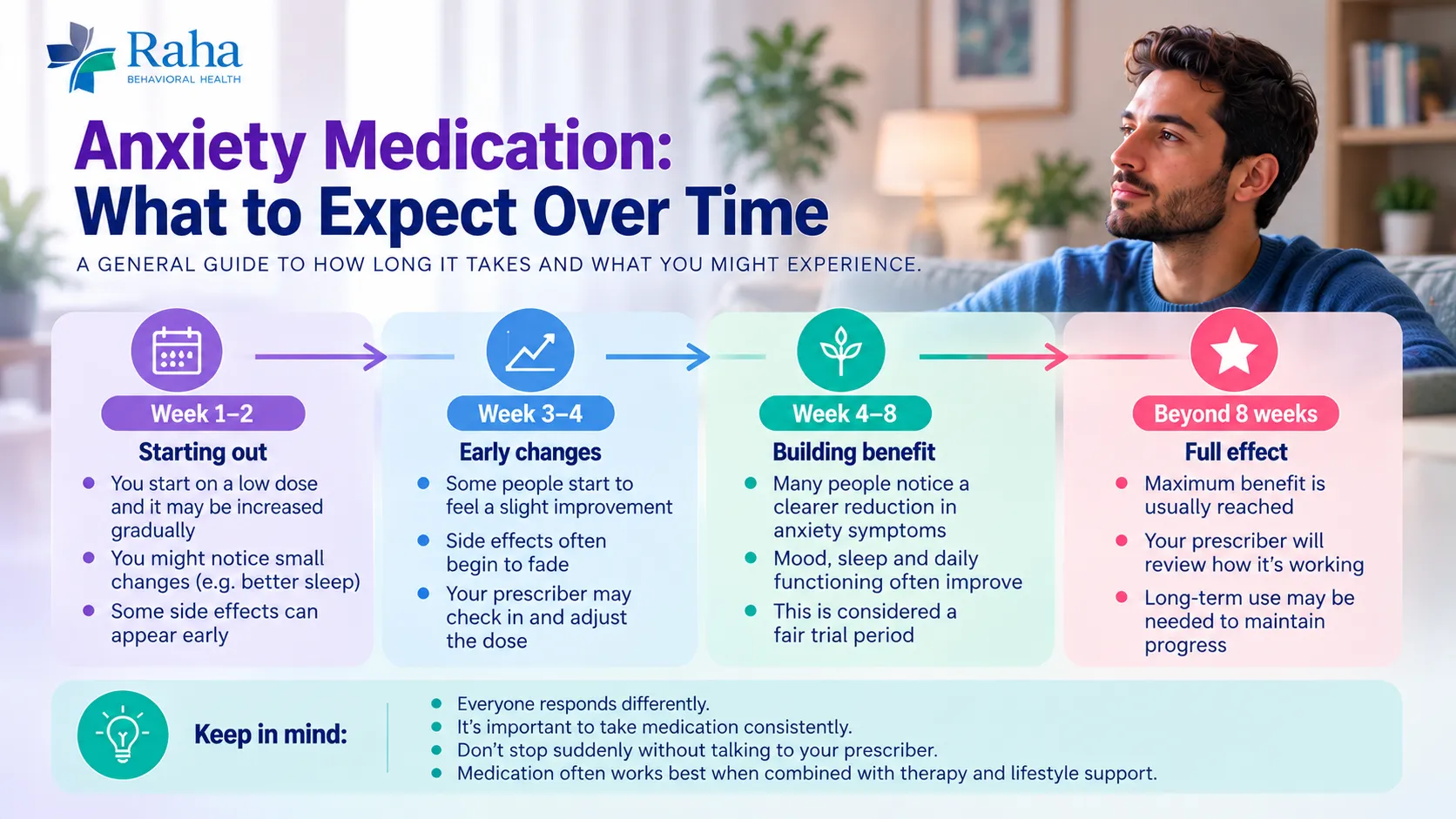
Longer than you want. About four to eight weeks.
Small things might show up sooner. You sleep a little better, or the edge comes off a bit. Real benefit takes longer, and this is exactly where people quit, because they’ve swallowed a pill for two weeks and still feel awful. Normal. Doesn’t mean it isn’t working.
We go into the timing properly in how long anxiety treatment takes to start working. Short version: a fair trial is counted in weeks, and your prescriber checks in during that stretch so you’re not left guessing.
What side effects can SSRIs cause?
Upset stomach, headache, dry mouth, loose stools, trouble sleeping. Some people sweat more or feel drowsy. Sexual side effects are on the list too, and yes, it’s awkward, but mention it anyway, because there are often ways to deal with it and your prescriber has heard it before.
A lot of the early stuff fades as your body gets used to the medicine. Not all of it. If something’s severe or won’t go away, say so. Don’t tough it out, and please don’t quietly stop.
One warning covers antidepressants as a group, SSRIs included. In people under about 25, they can raise the risk of suicidal thoughts or behavior, mostly in the first weeks or after a dose change. Most people never get this. Still, if you or someone in your family is starting one, watch for new or worsening depression, thoughts of self-harm, or severe agitation or panic, and call the prescriber right away. In immediate danger, call 988 or 911.
What’s the difference between SSRIs and SNRIs?
Cousins. SSRIs work on serotonin. SNRIs work on serotonin and norepinephrine too, another messenger involved in alertness and the stress response.
For a lot of anxiety conditions both are considered first-line, so a prescriber’s choice can come down to your symptoms, other conditions you have, and what’s worked or flopped before. The basics are the same either way: daily, weeks to kick in, no stopping suddenly.
How does the daily anti-anxiety medicine in its own class work?
This one was made for anxiety, and it’s in a class of its own.
You take it every day, usually twice, and consistently, so either always with food or always without. It has to build up. A few weeks of daily use to reach full effect, and it does nothing useful if you only take it when you feel anxious. People expect a rescue pill. It isn’t one.
Side effects people mention: dizziness, nausea, headache, nervousness, trouble sleeping, tiredness, lightheadedness. Skip alcohol, since the medicine can make you drowsy already. Large amounts of grapefruit or grapefruit juice are out too. And other medicines can interact with it, MAO inhibitors for one, so your prescriber and pharmacist need your whole list.
Call right away for a fast or irregular heartbeat, an allergic reaction, or a cluster like agitation, fever, sweating, confusion, seizures or severe muscle stiffness.
Why is an antihistamine used for anxiety?
The one used for anxiety began as an antihistamine. It blocks histamine, the stuff behind allergy symptoms, and it’s used for itchy allergic skin reactions. It’s also used to relieve anxiety and tension, partly because it dials down activity in the brain, which tends to feel calming and sedating.
The sedation is the headline with this type. Drowsiness is common. Dry mouth, dizziness, headache and confusion happen too, and confusion is more likely in older adults, who usually aren’t given it at all since safer options exist. Don’t drive or run machinery until you know how it hits you. Alcohol makes the side effects worse.
Not everyone should take it. If you’ve got a history of a heart rhythm problem called prolonged QT, tell your prescriber, who’ll probably steer you elsewhere. It’s not recommended in pregnancy or while breastfeeding. Details like that are exactly why the first visit matters, and why the pharmacist question “anything else you take?” isn’t small talk.
Where it fits for you is a call for you and your prescriber.
How do beta blockers help with anxiety?
Odd one, this. Beta blockers weren’t designed for anxiety at all. The beta blocker that comes up most is mainly for high blood pressure, irregular heartbeats and chest pain, and it’s used for certain tremors and migraines too.
But slow the heart down and a few anxiety symptoms get quieter: the racing pulse, the sweating, the trembling. So they’re sometimes prescribed short term for things like a phobia. They don’t do much for the worry itself. They quiet the body’s alarm, not the thought loop.
Using a medicine for something it wasn’t originally approved for is called off-label use. It’s legal and common, and prescribers do it when they’ve got reason to think it’ll help. It does mean the decision leans on their judgment, so ask why they’re suggesting it.
Cautions matter here. Beta blockers generally aren’t recommended if you have asthma or diabetes, since they can make asthma worse and can hide the warning signs of low blood sugar. Heart, lung or blood sugar problems all need to be on the table. And if you’ve been taking one regularly, don’t stop suddenly. That can cause serious heart problems.
If your main complaint is physical, our post on why anxiety often shows up as physical symptoms first explains why the body can sound the alarm before the worry does.
What is given for severe anxiety?
Everyone asks. The straight answer is that there’s no special drug for “severe.”
For ongoing anxiety the usual base is the same whether it’s mild, moderate or intense: an SSRI or SNRI, with therapy where it fits. A worse case doesn’t automatically mean a stronger or different pill. More often it means closer follow-up, a dose adjusted over time, or a combination.
Short-term help is where benzodiazepines come in. They get tied to severe anxiety in people’s minds, but the way they’re used is narrow. They’re generally prescribed for short periods, because taking them for a long time can lead to tolerance (the same dose stops working as well) or even dependence. When it’s time to stop, prescribers taper slowly to avoid withdrawal or rebound anxiety. And they’re usually not a good fit for anyone with a history of alcohol or drug misuse.
So if someone you know seems to have “the strong stuff” and you don’t, the reason is often that the strongest option isn’t the best match.
How does a prescriber decide which medicine to use?
By asking a lot of questions.
Your symptoms come first. Constant worry, panic attacks, dread in social situations, muscle tension, bad sleep. Then your history: what you’ve tried and how it went, because a medicine that helped you once, or gave you trouble, changes the picture. Other health conditions count, especially asthma, diabetes, heart rhythm problems, pregnancy and alcohol or drug use. So does everything else you take, vitamins and supplements included, since some combinations don’t mix.
At Raha Behavioral Health, care starts with a full evaluation of your symptoms, history, past medications, allergies and sleep. After that your provider walks through the options and you decide together. Follow-ups check how the medicine’s doing and whether there are side effects, and early on they’re usually closer together. You can read how that runs on our medication management page.
Tried something before and it didn’t help? Say so. A medication that didn’t work isn’t a dead end, it’s information.
What if the first medicine doesn’t work or doesn’t feel right?
Happens. Not unusual.
Sometimes the dose needs tuning. Sometimes you just need more time. Sometimes the side effects aren’t worth it and a different medicine suits you better. A prescriber might switch you, change the dose, or add something. That’s the normal process, and it’s what follow-ups are for.
What doesn’t work is guessing alone. Skipping doses, doubling up, stopping on your own: all of it can make things worse and muddy the picture for your prescriber. Call before you change anything.
Can you stop anxiety medication once you feel better?
Not by yourself, and not all at once.
Feeling better usually means the medicine’s doing its job. Stop the minute you feel good and you can end up right back where you started. With SSRIs, quitting suddenly can bring withdrawal-like symptoms, things like mood changes, irritability, dizziness, sweating and trouble sleeping, and with antidepressants a fast exit may also bring symptoms back. Your prescriber usually lowers the dose gradually.
Same caution for beta blockers, where stopping suddenly after regular use can cause heart problems, and for benzodiazepines, which get tapered slowly.
How long you stay on something varies, and that’s a talk to have with your prescriber, not a rule from the internet.
Does medication replace therapy?
Not really. They do different jobs.
Medicine can lower the intensity enough that you can actually use what therapy teaches. Therapy, like cognitive behavioral therapy, works on the thoughts and habits that keep anxiety running. For lots of people the two together beat either alone, and for some, therapy first is a perfectly reasonable start. Our page on cognitive behavioral therapy explains what that looks like, and Raha’s providers coordinate therapy referrals when someone wants both.
If your anxiety has a specific shape, there are more focused pages: generalized anxiety disorder, social anxiety and postpartum anxiety. And if you can’t tell whether it’s anxiety, depression or both, the post on warning signs of anxiety disorder is a decent place to start.
What if you’re nervous about starting medication?
Lots of people are. Scared of side effects, scared of getting hooked, scared that taking something means they’ve failed at handling it alone.
Some of that has an answer. The side effects people ask about are covered above, and your prescriber can say which to expect first and which mean you should call. The dependence worry depends on the medicine. It’s a real consideration with benzodiazepines, which is exactly why they’re kept to short stretches. And needing medicine says nothing about willpower. Anxiety has a physical side, and using something that helps isn’t a character flaw.
Some people want to try therapy first, and that’s a reasonable way to begin. Others want both from day one. Tell your provider what you’re comfortable with at the first visit. The best plan is one you’ll actually follow, and you can bring up concerns at any follow-up, not just the first.
What should you tell your prescriber before you start?
All of it.
Every other medication, vitamin and supplement. Allergies and past reactions. How much alcohol you drink, and any other substances. Whether you’re pregnant, planning to be, or breastfeeding. Heart, lung and blood sugar conditions. Whatever you’ve been given before for anxiety, and how it went.
Then ask things back. What’s this medicine for, and why this one? How long till I’d notice anything? What side effects should I watch for, and which ones mean I call? What if I miss a dose? How will we know it’s working? Write the answers down, because nobody remembers an appointment word for word.
And if sleep is part of the mess, insomnia treatment is worth a look, since anxiety and bad sleep feed each other.
Talking through anxiety medication at Raha Behavioral Health
Thinking about medication for anxiety, or on something now that isn’t sitting right? An evaluation is where it starts. Raha Behavioral Health sees patients in person at our Westheimer office in Houston, and by telehealth for eligible patients. New patients can get same-week appointments whenever clinically possible.
You can meet the team on our providers page, read about anxiety treatment in Houston and medication management in Houston, or contact us to book. Still working out what kind of support you need? Our guide to every concern we treat can help you narrow it down.
If you ever have thoughts of harming yourself, don’t wait for an appointment. Call or text 988, or call 911 if you’re in immediate danger.
Quick answers
Which medicines are used for anxiety?
Mostly SSRIs and SNRIs, a daily anti-anxiety medicine in its own class, and in some cases an antihistamine, beta blockers or short-term benzodiazepines. Which one fits depends on your symptoms and history.
Is one SSRI better than another for anxiety?
None wins across the board. Some are used for generalized anxiety disorder, and others for panic attacks, social anxiety, OCD and PTSD, among other things. Your prescriber picks based on what you’re dealing with.
How long do SSRIs take to work for anxiety?
Typically about four to eight weeks for full effect, though some people notice small changes earlier.
Is the daily anti-anxiety medicine taken as needed?
No. Every day, and it takes a few weeks of regular use to reach full effect. Doesn’t work as a take-it-when-anxious medicine.
Is the antihistamine used for anxiety addictive?
Drowsiness is the main thing to know about it, and alcohol makes it worse. For questions about dependence and your own risk, ask your prescriber.
Do beta blockers treat anxiety?
They’re used off-label, mainly for physical symptoms like a racing heart, sweating and shaking. They don’t treat the worry itself, and they aren’t for everyone, particularly people with asthma or diabetes.
What's given for severe anxiety?
No separate drug exists for it. SSRIs or SNRIs are the usual base, with therapy and closer follow-up. Benzodiazepines are sometimes used for short periods, but they carry a risk of tolerance and dependence.
Can I stop my anxiety medication when I feel better?
Not on your own. Stopping suddenly can bring withdrawal-like symptoms or bring anxiety back, and your prescriber can taper you safely.
Are there side effects to watch for in young people?
Yes. Antidepressants, SSRIs included, carry a warning for people under about 25, because suicidal thoughts can increase early in treatment or after a dose change. Report any new or worsening symptoms right away.
Can I take anxiety medication and do therapy at the same time?
Yes, and plenty of people do. Medicine can lower the intensity so therapy skills are easier to use, and therapy works on the patterns that keep anxiety going.
This article is for general informational purposes only and does not diagnose or replace medical advice. Never start, stop or change a medication without talking to a licensed prescriber. Medication choices depend on your health history, and only a licensed provider can determine what’s right for you.
Sources
- National Institute of Mental Health (NIMH). Mental Health Medications
- Mayo Clinic. Generalized anxiety disorder: Diagnosis and treatment
- Mayo Clinic. Antidepressants: Another weapon against depression
- MedlinePlus (National Library of Medicine). Drug information: an SSRI antidepressant used for anxiety and depression
- MedlinePlus. Drug information: an SSRI antidepressant used for panic, social anxiety, OCD and PTSD
- MedlinePlus. Drug information: a daily anti-anxiety medicine
- MedlinePlus. Drug information: an antihistamine used for anxiety and itching
- MedlinePlus. Drug information: a beta blocker
- NHS. Generalised anxiety disorder: Treatment
- Raha Behavioral Health. Medication Management