

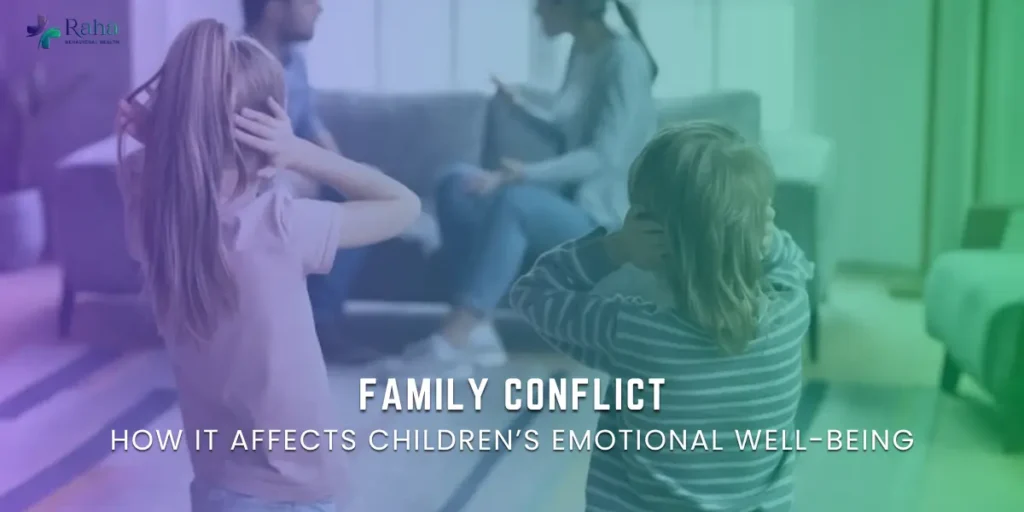
Family Conflict can affect much more than the adults involved. When disagreements, tension, criticism, or unresolved problems become frequent at home, children may begin to feel uncertain about their emotional safety. Even when parents believe they are keeping disagreements private, children can often notice changes in tone, routines, communication, and behavior.
Family Conflict does not always involve loud arguments. Ongoing tension, emotional distance, frequent criticism, or disagreements about parenting can also create stress for children. Family Conflict becomes particularly concerning when children repeatedly feel caught between adults or believe they are responsible for keeping everyone happy.
Understanding how these experiences affect a child is an important step toward creating a healthier home environment. Children need consistency, reassurance, and supportive relationships to develop emotional confidence. When problems arise, the way adults manage those problems can influence how children understand relationships, communication, and their own emotions.
Why Family Conflict Can Affect Children So Deeply
Children depend heavily on caregivers for emotional security. Home is usually the first environment where they learn whether relationships feel dependable, whether disagreements can be resolved, and whether difficult emotions can be expressed safely.
When conflict is persistent or intense, that sense of security may become unsettled. A child may not understand the details of an adult disagreement, but they can still recognize that something feels wrong. Changes in facial expressions, raised voices, silence, withdrawal, or unpredictable reactions can communicate stress without anyone explaining it directly.
The effects also depend on the child’s age, personality, temperament, relationship with caregivers, and the nature of the disagreements. A brief disagreement that is handled respectfully is very different from repeated hostility or unresolved tension.
Research in child development and family psychology has consistently emphasized the importance of stable, responsive relationships for healthy emotional development. Children do not need a completely conflict-free home. They need adults who can demonstrate healthy ways of handling disagreement, repairing relationships, and providing reassurance.
Emotional Signs Children May Show
One of the challenges for parents is that children do not always say, “I am stressed because of what is happening at home.” Instead, emotional distress may appear through changes in behavior.
A child who previously seemed confident may become unusually quiet. Another may become more irritable, clingy, tearful, or fearful. Some children may repeatedly seek reassurance, while others may withdraw and spend more time alone.
These changes should not automatically be attributed to problems at home. Children can experience emotional difficulties for many reasons, including school pressures, friendships, developmental changes, grief, or other stressful circumstances. However, a noticeable change that occurs alongside ongoing tension in the household deserves attention.
Anxiety and Excessive Worry
Children exposed to frequent tension may become more worried about what could happen next. They might pay close attention to adults’ moods or become nervous when voices become louder.
Younger children may struggle to explain this worry clearly. Older children may understand more about the situation but still feel powerless to change it.
Sadness and Withdrawal
Persistent household tension can contribute to sadness or emotional withdrawal. A child may lose interest in activities they previously enjoyed or appear less engaged with family members.
Withdrawal can sometimes be subtle. A child may spend more time in their room, avoid conversations, or stop sharing thoughts and feelings.
Irritability and Anger
Emotional stress does not always look like sadness. Some children respond to difficult circumstances through frustration, defiance, or anger.
A child may have more frequent emotional outbursts or become easily upset over relatively small situations. This does not necessarily mean the child is simply “misbehaving.” Behavior can sometimes communicate emotional needs that the child cannot put into words.
Effects on a Child’s Sense of Security
A child’s emotional security is closely connected to predictable and supportive caregiving. When relationships at home feel unstable, children may begin to wonder whether their environment is dependable.
Family Conflict can interfere with that sense of predictability when disagreements are frequent, intense, or unresolved. A child may become overly alert to changes in adult behavior, waiting for signs that another argument is about to occur.
This can create a pattern in which the child spends emotional energy monitoring the household rather than focusing on normal developmental tasks such as learning, playing, forming friendships, and becoming more independent.
Some children may also develop a strong need to keep the peace. They may avoid expressing their own needs because they fear making an already difficult situation worse.
Can Conflict Affect a Child’s Self-Esteem?
Children sometimes personalize situations they do not understand. They may wonder whether something they said or did caused an argument, particularly when adults’ disagreements involve parenting or household routines.
Family Conflict may contribute to self-blame when a child repeatedly hears disagreements connected to them or believes they must somehow repair relationships between adults.
Children need clear reassurance that adult disagreements are not their responsibility. Parents can reinforce this message by communicating that grown-up problems belong to grown-ups and that children are not expected to choose sides, deliver messages, or solve relationship problems.
Healthy reassurance should be consistent rather than offered only after a major argument. A calm conversation can help a child understand that difficult emotions and disagreements do not automatically mean that relationships are going to disappear.
Impact on Behavior and Daily Life
Emotional stress can sometimes affect a child’s everyday functioning. Parents may notice changes in sleeping patterns, appetite, concentration, school performance, social behavior, or willingness to participate in normal activities.
Family Conflict may also influence how children respond to authority and boundaries. Some become more oppositional, while others become unusually compliant because they are trying to avoid creating additional tension.
These reactions should be considered in context. A single difficult week does not necessarily indicate a serious emotional problem. However, persistent changes that interfere with school, relationships, sleep, or family life deserve thoughtful attention.
Rather than focusing only on stopping an unwanted behavior, caregivers can ask what the behavior might be communicating. Is the child frightened? Overwhelmed? Looking for reassurance? Feeling ignored? These questions can open the door to more constructive support.
How Family Conflict Can Influence Future Relationships
Children learn about relationships partly by observing the adults around them. They watch how people communicate, disagree, apologize, establish boundaries, and repair emotional injuries.
Family Conflict does not automatically determine how a child will behave in future relationships. Children are capable of developing healthy relationship skills even after difficult experiences. Supportive adults, therapy, positive friendships, education, and healthy environments can all provide opportunities to learn different patterns.
Still, repeated exposure to unhealthy communication may influence what a child considers normal. A child may become highly avoidant of disagreement or, alternatively, begin to believe that shouting, criticism, or emotional withdrawal are ordinary ways of resolving problems.
This is why repair matters. Children benefit from seeing adults acknowledge mistakes and demonstrate that disagreement can be followed by respectful communication and reconnection.
The Difference Between Healthy Disagreement and Harmful Conflict
Not every disagreement is harmful. Families are made up of people with different needs, opinions, personalities, and expectations. Disagreements are a normal part of relationships.
The concern is generally less about whether disagreements happen and more about how they are handled.
Healthy communication allows people to express concerns without intimidation, humiliation, threats, or persistent hostility. Adults can disagree while maintaining respect and remembering that children should not be placed in the middle.
Harmful patterns may involve repeated verbal aggression, threats, controlling behavior, prolonged hostility, or involving children in adult disputes. When conflict becomes frightening or unsafe, professional support may be especially important.
If there is violence, intimidation, or an immediate safety concern in the household, protecting the child and other family members should take priority over attempting to resolve the disagreement through ordinary communication.
How Parents Can Support Children Emotionally
Parents cannot always prevent disagreements. They can, however, take meaningful steps to reduce the emotional burden placed on children.
First, avoid making children messengers between adults. A child should not be expected to carry information, negotiate between parents, or report what one caregiver said about another.
Second, provide age-appropriate reassurance. Children need to know that they are loved, that they are not responsible for adult problems, and that caregivers are working to handle difficult situations appropriately.
Third, maintain routines when possible. Regular meals, school schedules, bedtime routines, family activities, and predictable expectations can provide a sense of stability during stressful periods.
Finally, make space for the child’s feelings. A simple question such as, “How have things been feeling for you lately?” can create an opportunity for honest conversation.
When Should Parents Consider Professional Support?
Sometimes children recover emotionally with reassurance, stability, and improved communication at home. In other situations, professional support can make an important difference.
Parents may consider speaking with a mental health professional when emotional or behavioral changes persist, become more intense, or interfere with everyday life.
Family Conflict may be particularly concerning when a child shows ongoing anxiety, sadness, aggression, withdrawal, sleep problems, declining school performance, or significant changes in social behavior.
Professional support does not mean that a family has failed. Therapy can provide a structured environment where children and caregivers learn to communicate more effectively, understand emotional needs, and develop healthier coping strategies.
A qualified mental health professional can also help determine whether a child’s symptoms may be connected to household stress or another underlying concern.
Therapy and Emotional Support for Children
Child and family therapy can provide children with a safe space to express emotions they may find difficult to discuss at home. Depending on the child’s needs, treatment may involve individual therapy, family sessions, parent guidance, or a combination of approaches.
Family Conflict can be explored in therapy without placing blame on one person. The focus can instead be on communication patterns, emotional responses, family roles, coping strategies, and practical ways to create greater stability.
Evidence-based approaches may include cognitive behavioral techniques, family-based interventions, behavioral strategies, and other developmentally appropriate methods. The appropriate approach depends on the child’s age, symptoms, family circumstances, and clinical needs.
Parents should look for qualified mental health professionals who consider the whole child rather than focusing on a single behavior in isolation.
Creating a More Emotionally Secure Home
Reducing household tension is not about creating a perfect family. Every family experiences difficult moments. The goal is to build an environment where people can disagree without creating fear and where emotional repair is possible.
Parents can model several important skills: listening before reacting, taking breaks when emotions become intense, using respectful language, acknowledging mistakes, and returning to difficult conversations when everyone is calmer.
Children also benefit when adults show that emotions themselves are not dangerous. Anger, disappointment, frustration, and sadness can be acknowledged without allowing those emotions to become harmful behavior.
Family Conflict can become an opportunity for adults to examine how they communicate and what children are learning from those interactions. Even small changes can contribute to a stronger sense of emotional safety.
Helping Children Build Resilience
Resilience does not mean that children never experience stress. It means they can develop the ability to cope with difficult experiences while maintaining supportive relationships and a sense of self-worth.
Family Conflict may place emotional pressure on children, but positive relationships can act as an important protective factor. A caring parent, trusted relative, teacher, counselor, coach, or therapist can give a child a reliable place to feel heard and understood.
Encouraging healthy friendships, creative activities, physical activity, adequate sleep, and age-appropriate independence can also support emotional well-being.
Most importantly, children need to know that their feelings matter. When adults listen without immediately dismissing or correcting those feelings, children are more likely to develop confidence in communicating their emotional needs.
Why Early Support Matters
Addressing emotional difficulties early can prevent problems from becoming more deeply established. Parents do not need to wait until a child reaches a crisis point before seeking guidance.
Family Conflict can affect children differently, and there is no single emotional response that applies to every child. Some children may appear unaffected while quietly carrying significant stress. Others may communicate distress very openly through behavior.
Paying attention to changes, listening carefully, and seeking professional guidance when appropriate can help families respond before difficulties become overwhelming.
Supporting Children Through Family Challenges
Children cannot control the relationships and circumstances created by adults, but adults can influence how children experience those circumstances. Creating emotional safety requires patience, consistency, honest communication, and a willingness to seek help when needed.
Family Conflict does not have to define a child’s emotional development. With supportive relationships and appropriate intervention, children can learn healthy coping skills, strengthen emotional awareness, and develop confidence in navigating relationships.
If your child is struggling with anxiety, sadness, behavioral changes, withdrawal, or other emotional concerns related to stress at home, professional guidance can provide a clearer path forward. A qualified behavioral health professional can help assess the child’s needs and recommend appropriate support.
For families in need of behavioral health services, Raha Behavioral offers professional mental health support designed around individual and family needs. Reaching out for help is not an admission that something has gone wrong beyond repair. Sometimes it is simply the first practical step toward creating a healthier emotional environment for everyone.