

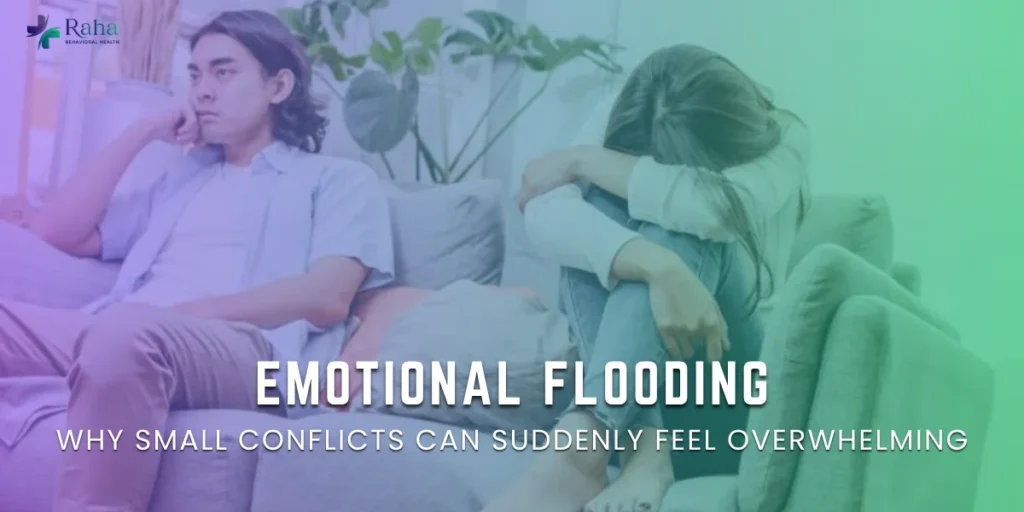
Have you ever had a disagreement that seemed small at first, yet your emotional reaction felt enormous? Emotional Flooding can help explain why. Emotional Flooding occurs when intense emotions become so overwhelming that it becomes difficult to think clearly, communicate effectively, or respond calmly. During Emotional Flooding, the nervous system can react as though the situation requires immediate protection, even when the conflict itself is relatively minor.
For people experiencing Emotional Flooding, a simple disagreement may suddenly feel impossible to handle. Emotional Flooding can affect relationships, decision-making, communication, and overall emotional well-being. Understanding this response is not about blaming yourself for reacting strongly. It is about recognizing what happens internally so you can begin responding differently.
What Is Emotional Flooding?
Emotional Flooding refers to a state of intense emotional and physiological activation in which a person becomes temporarily overwhelmed by feelings. The experience can involve anger, fear, anxiety, sadness, frustration, or several emotions at once.
When someone becomes emotionally flooded, the brain may prioritize immediate emotional survival over careful reasoning. Concentrating on what another person is saying can become difficult. Finding the right words may feel almost impossible. A person may want to argue, defend themselves, shut down, leave the conversation, or end communication altogether.
This does not necessarily mean the person is overreacting intentionally. Emotional responses are influenced by stress, previous experiences, personality, relationship dynamics, sleep, current circumstances, and many other factors.
The important distinction is that the emotional response can become larger than the person’s ability to process it in that moment.
Why Can Small Conflicts Feel So Overwhelming?
A conflict rarely exists in isolation. A disagreement happening today can activate emotions connected to stress that has been accumulating for weeks or months.
Imagine carrying a heavy emotional load throughout the day. There may already be pressure from work, family responsibilities, financial concerns, relationship uncertainty, poor sleep, or unresolved feelings. Then a relatively ordinary disagreement occurs. The disagreement may not be the entire reason for the reaction. It may simply be the point at which the person’s emotional capacity has been exceeded.
This is one reason Emotional Flooding can feel confusing. Someone may think, “Why am I reacting this strongly?” The answer may have less to do with the immediate conversation and more to do with everything the nervous system has been carrying beforehand.
Unresolved relationship concerns can also contribute. Raha Behavioral Health notes that communication difficulties, unresolved disagreements, life changes, and family dynamics can contribute to emotional strain within relationships.
The Nervous System and Emotional Overload
When the brain perceives a situation as threatening, the body can shift into a heightened state of alertness. Heart rate may increase, muscles may tense, breathing may become faster, and attention may narrow toward the perceived problem.
These responses are part of the body’s stress system. They can be useful when immediate action is genuinely required. During an ordinary interpersonal disagreement, however, intense physiological activation can make thoughtful communication much harder.
This is why telling someone to “just calm down” often does not solve the problem. The person may already understand intellectually that the situation is manageable. Their body may simply not feel safe or settled enough to process the conversation calmly.
Learning to recognize physical signs of emotional activation can therefore be an important part of improving emotional regulation.
Common Signs of Emotional Flooding
The signs of Emotional Flooding can differ from one person to another. Some people become visibly angry, while others become quiet, distant, tearful, or anxious.
Common experiences may include:
- Rapid heartbeat or physical tension
- Difficulty concentrating on the conversation
- Feeling unusually defensive
- Strong urges to leave or end the discussion
- Raising one’s voice or speaking more quickly
- Difficulty finding words
- Feeling trapped, threatened, or misunderstood
- Crying unexpectedly
- Shutting down emotionally
- Replaying the disagreement repeatedly afterward
- Needing significant time to feel calm again
Not every intense emotional response indicates a mental health condition. People can become overwhelmed during stressful periods without having a diagnosable disorder.
However, if these reactions happen frequently or interfere with relationships, work, family life, or daily functioning, they deserve attention.
What Causes Emotional Flooding?
There is rarely one universal cause. Emotional Flooding may develop from several interacting factors.
Chronic Stress
When stress remains elevated for an extended period, emotional tolerance may decrease. Situations that would normally feel manageable can begin to feel much harder.
Chronic stress can also affect sleep, concentration, patience, and physical well-being. When a person is already depleted, there may be less emotional capacity available for handling disagreement.
Anxiety
Anxiety can make uncertainty and perceived rejection especially difficult to tolerate. During conflict, an anxious mind may rapidly focus on what could go wrong.
This can increase physiological arousal and make the disagreement feel more urgent than it actually is.
Past Emotional Experiences
Previous experiences can influence how people interpret present situations. Certain forms of criticism, rejection, abandonment, hostility, or invalidation may make particular interactions especially emotionally charged.
Understanding these patterns can help a person recognize that a present reaction may be influenced by more than the current conversation.
Relationship Conflict
Repeated unresolved disagreements can create emotional exhaustion. When people feel unheard or misunderstood over time, even another discussion about the same issue may feel overwhelming.
Raha Behavioral Health’s relationship and couples counseling services emphasize communication difficulties, recurring conflict, emotional distance, trust concerns, and unresolved relationship patterns as areas that may benefit from professional support.
Anger and Irritability
Anger can sometimes become the most visible part of an overwhelmed emotional response. Underneath anger, however, a person may also be experiencing fear, disappointment, hurt, exhaustion, or helplessness.
Raha Behavioral Health describes anger management care as focusing on identifying triggers, understanding emotional patterns, developing coping skills, and learning to respond rather than react.
How Emotional Flooding Affects Communication
Communication becomes particularly difficult when emotions reach a high level of intensity. Emotional Flooding may cause people to listen defensively rather than openly.
Instead of processing what the other person means, the mind may focus on protecting itself. A neutral statement can feel critical. A request can feel demanding. A pause can feel like rejection. The person may interrupt, withdraw, become defensive, or say something they later regret.
Once both people become emotionally activated, the conversation can escalate quickly.
This creates a frustrating cycle. One person reacts strongly, the other becomes defensive, the first person feels even less understood, and both become increasingly distressed.
Breaking this cycle requires more than simply choosing better words. It often requires recognizing when emotional activation has become too high for productive conversation.
Emotional Flooding and Relationships
Repeated episodes can gradually affect trust and emotional connection. Partners may begin avoiding difficult conversations because they expect them to become intense. Alternatively, they may continue having the same arguments without reaching meaningful resolution.
Over time, this can create emotional distance.
The goal is not to eliminate disagreement. Healthy relationships can include different opinions, frustrations, boundaries, and difficult conversations. The goal is to make conflict safer and more constructive.
Couples counseling can provide a structured environment where partners can explore communication patterns, emotional needs, recurring conflict, trust concerns, and relationship goals. Raha Behavioral Health specifically describes couples counseling as a space for improving communication, understanding relationship patterns, resolving conflict, and strengthening emotional connection.
How to Stop Emotional Flooding From Taking Over
The first step is noticing the early signs rather than waiting until emotions reach their peak.
If you notice your heart racing, your muscles tightening, your thoughts speeding up, or your ability to listen disappearing, consider pausing the conversation.
A brief pause is not the same as avoidance. The purpose is to create enough space for the nervous system to settle so that the conversation can continue more productively.
Slow, controlled breathing can help reduce physical arousal. Moving to a quieter environment may also help. Some people benefit from walking, drinking water, sitting quietly, or using grounding techniques.
The key is to return to the conversation once you are sufficiently regulated rather than using the pause as a permanent escape.
Build Emotional Awareness Before Conflict Happens
Managing Emotional Flooding becomes easier when you understand your personal warning signs.
Consider paying attention to what happens immediately before you become overwhelmed. Do you notice physical tension? Does your thinking become rigid? Do you start assuming negative intentions? Do you feel an urgent need to defend yourself?
These questions can reveal patterns.
It can also help to identify the situations in which your emotional threshold tends to be lower. Lack of sleep, ongoing stress, unresolved relationship problems, and major life changes can all influence emotional resilience.
The more clearly you understand your own patterns, the sooner you can intervene.
Learn to Separate Feelings From Immediate Actions
Strong feelings are real, but they do not always require immediate action.
You can feel angry without immediately sending a message. You can feel hurt without ending a relationship. You can feel defensive without turning the conversation into an argument.
This distinction is central to emotional regulation.
The goal is not to suppress feelings. Suppression can make emotional experiences harder to understand. Instead, the aim is to notice the feeling, tolerate its presence, understand what it may be communicating, and choose a response that aligns with your long-term goals.
That process takes practice.
When Should You Consider Professional Support?
Occasional emotional overwhelm can happen to anyone. Professional support may be especially useful when Emotional Flooding becomes frequent, intense, or disruptive.
Consider talking with a mental health professional if emotional reactions regularly affect your relationships, work, family life, decision-making, or ability to communicate.
Support may also be appropriate if you frequently experience intense anger, persistent anxiety, emotional shutdown, ongoing relationship conflict, or difficulty calming yourself after disagreements.
Raha Behavioral Health provides personalized psychiatry and therapy services for individuals, couples, children, and families, with care tailored to individual needs.
Therapy can provide a confidential environment for understanding emotional patterns, identifying triggers, improving communication, and developing healthier coping strategies.
What Therapy for Emotional Overwhelm May Focus On
Treatment depends on the person’s circumstances. A provider may explore emotional triggers, relationship patterns, stress levels, thought patterns, past experiences, communication habits, and current challenges.
Therapeutic work may involve developing emotional regulation skills, improving communication, learning healthier approaches to conflict, and recognizing thoughts that intensify distress.
For relationship concerns, couples therapy may focus on communication, emotional connection, recurring conflict, trust, and healthier interaction patterns. For anger-related concerns, treatment may focus on recognizing early warning signs and developing strategies that support more controlled responses.
The purpose is not to make someone emotionless. Emotional health is not about becoming perfectly calm at all times. It is about developing enough awareness and flexibility to respond to difficult moments without allowing intense emotions to control every decision.
Can Emotional Flooding Be Prevented?
Complete prevention is not always realistic. Stressful situations and difficult conversations are part of life. The more useful goal is to reduce the frequency, intensity, and consequences of these episodes.
That can involve improving sleep, managing ongoing stress, practicing emotional awareness, developing communication skills, maintaining supportive relationships, and seeking professional help when needed.
It also means learning to respect your emotional limits.
If you know that you are too activated to have a productive conversation, continuing to push through may make things worse. Taking a thoughtful pause can sometimes protect the relationship rather than harm it.
Frequently Asked Questions (FAQ's)
Is Emotional Flooding a mental health disorder?
No. Emotional Flooding describes an experience of becoming emotionally overwhelmed. It is not, by itself, a formal mental health diagnosis. It can occur alongside stress, anxiety, anger, relationship difficulties, trauma-related experiences, or other emotional challenges.
Why do I get overwhelmed during small arguments?
The intensity of a reaction may be influenced by accumulated stress, unresolved emotions, relationship patterns, anxiety, fatigue, or previous experiences. The immediate disagreement may be only one part of the overall emotional load.
Can Emotional Flooding damage relationships?
Yes, repeated episodes can contribute to communication difficulties, withdrawal, defensiveness, recurring arguments, and emotional distance. Learning to recognize and manage these reactions can support healthier communication.
How long does Emotional Flooding last?
The duration varies. Some people begin settling relatively quickly after leaving a stressful interaction, while others need considerably more time before they feel emotionally regulated. The circumstances, level of stress, and individual coping abilities all matter.